CUSTOM SOLUTIONS · APPS · INTEGRATION · AUTOMATION · AI

Run the business.
We'll run the systems.

Custom web and mobile apps, automation and integration for small and mid-size companies — built to fit the way you already work.

  • Over 100 systems in production
  • Runs on your own server
  • The code is yours
100+ systems in production
6 industries served
1-2 weeks to a working prototype
100% satisfaction rate

SELECTED WORK

Problems we've already solved

01 RETAIL & E-COMMERCE

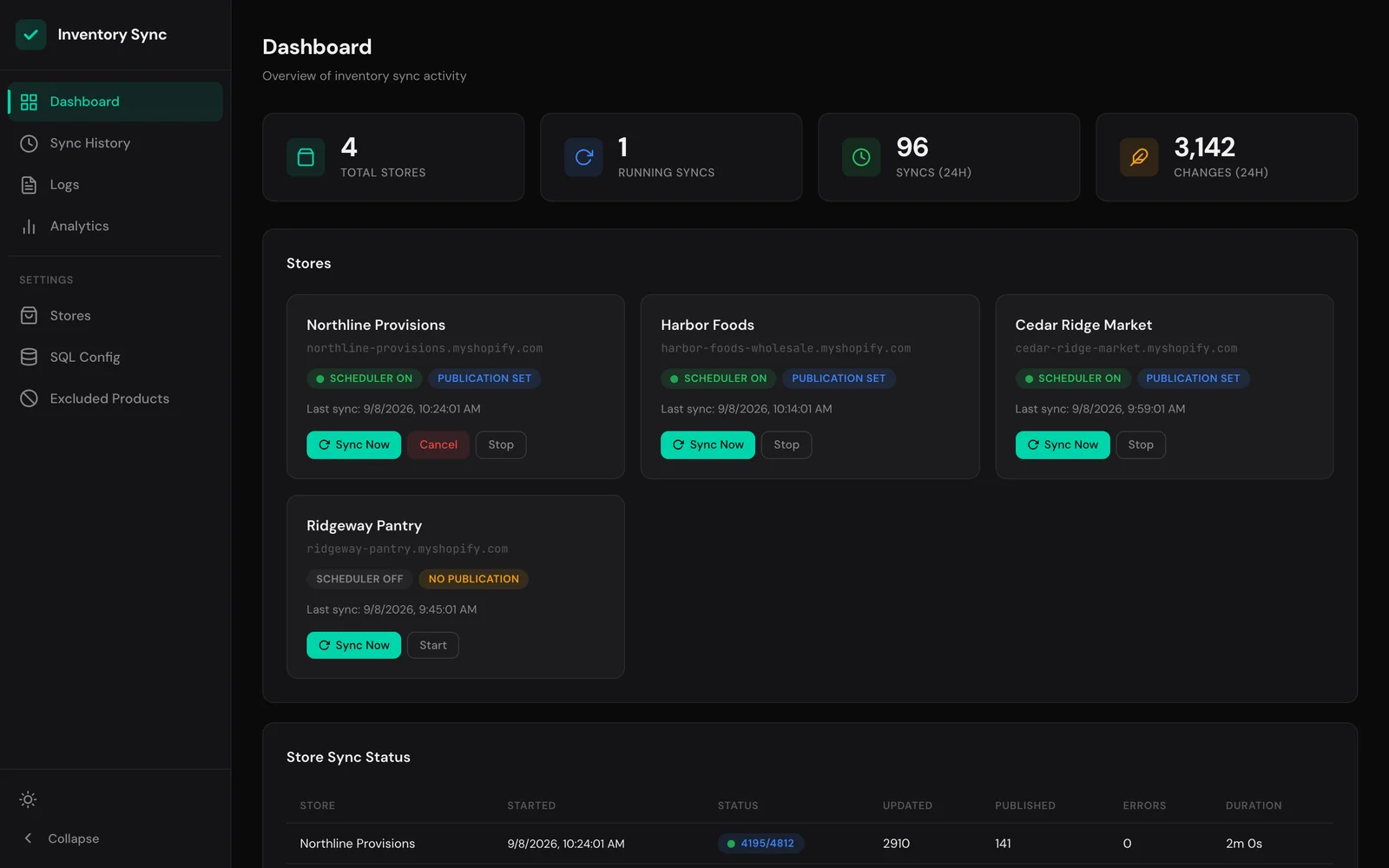
Stop overselling across every storefront

6 weeks to first sync · ongoing support

Two customers bought the last one within an hour of each other, on two different stores, because neither store knew the other had already sold it. Somebody had to phone one of them and apologize.

  • 0stock files uploaded by hand
  • 5 minfastest sync cycle
  • 4stock signals combined
PythonShopify APISQL ServerPostgreSQLDocker

Read the case study

02 DISTRIBUTION & WHOLESALE

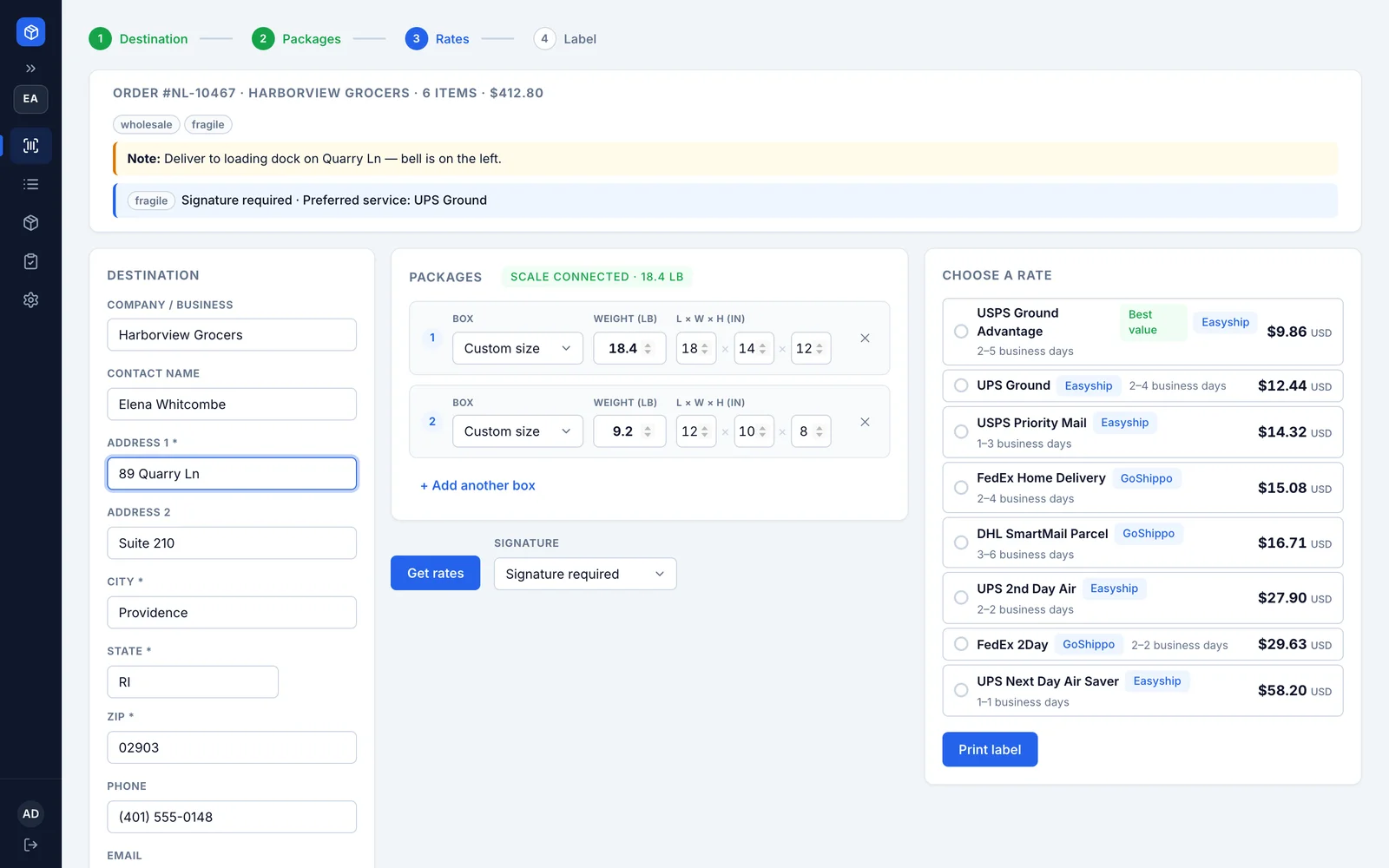
From scan to printed label, one screen

8 weeks · ongoing support

The packer reads the address off one screen and types it into another, weighs the box and types that in too, compares carrier tabs by eye, then goes back into two systems to paste the tracking number. Per box.

  • 5carrier platforms, one screen
  • 0clicks in auto mode
  • 2systems updated per label
PythonCarrier APIsShopifySQL ServerDocker

Read the case study

03 DISTRIBUTION & WHOLESALE

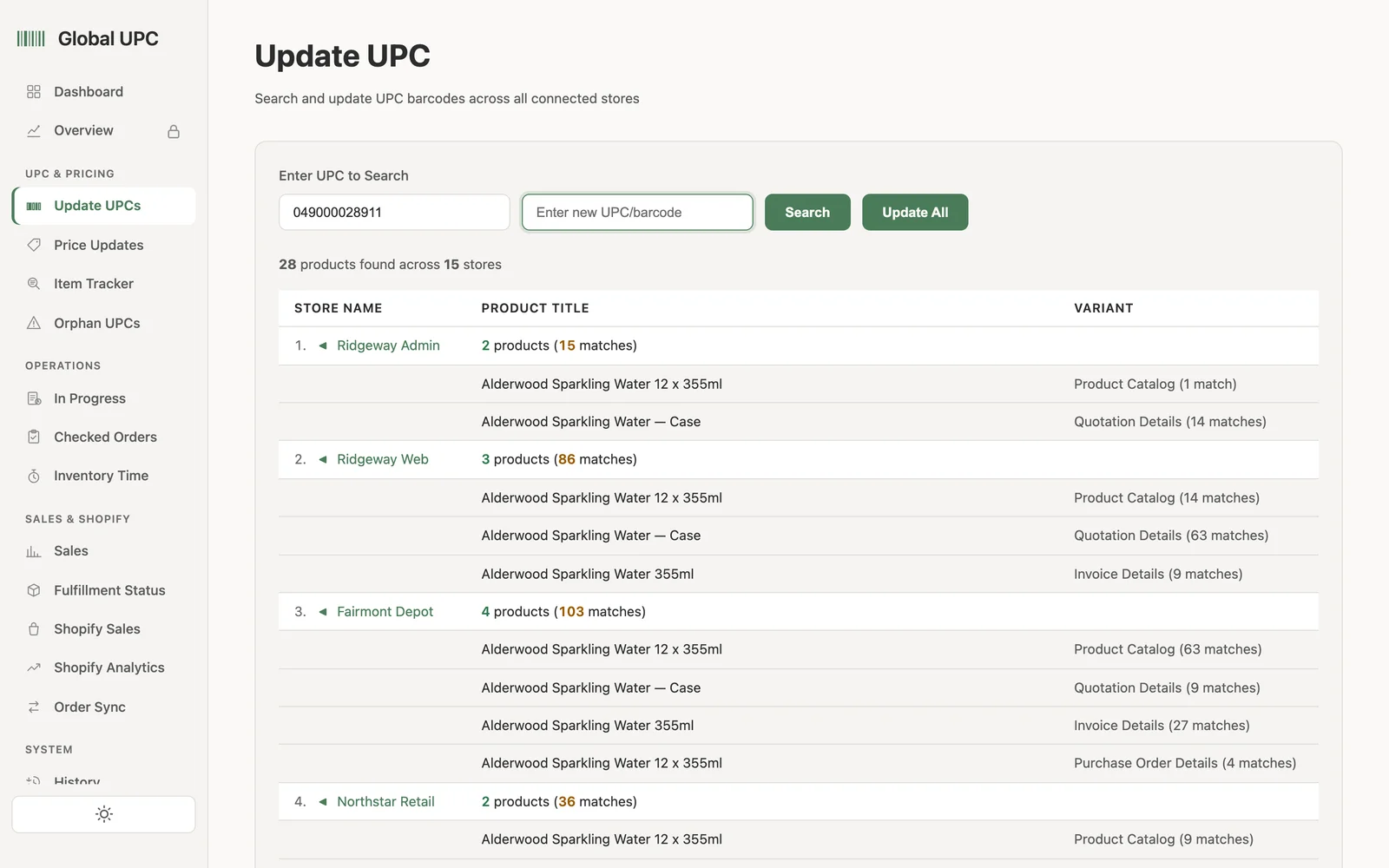
One barcode truth across every system

Eleven months and counting · ongoing

Changing one barcode meant opening five systems and editing it by hand — and every quote, purchase order and invoice ever raised still carried the old one, forever.

  • 15storefronts kept in step
  • 8tables fixed per barcode
  • 4price tiers, one entry
PythonFastAPISQL ServerShopify APIPostgreSQL

Read the case study

OPTIMIZE WITH AI

The jobs that never reach the top of the list

Nine hundred product pages with no descriptions. A drawer of scanned invoices. Three years of transactions to sort. Nobody has a spare month, so it never gets done — and it costs you every month it doesn't. This is the work AI is genuinely good at.

Why it doesn't cost a fortune to run

Most of your records never reach the AI at all. Cheaper steps handle them first, so you only pay for the hard ones — and there are fewer of those every month.

  1. 01 Your rules first The obvious ones, handled for nothing.
  2. 02 Then what it remembers Anything you've corrected once, it already knows.
  3. 03 Then your own records Your catalog, your ledger, your history.
  4. 04 AI on the hard ones Usually a small slice. The only part you pay a model for.
  5. 05 You have the last word It shows its reasoning. You say yes, or you don't.

It won't invent things about your business.

Everything it writes comes out of your own records — your products, your numbers, your search data. If a fact isn't in there, it doesn't reach the page. No made-up specifications, no invented claims for a customer to find.

Nothing changes until you say so.

Every suggestion waits for a click, with its reasoning next to it. Your catalog, your prices and your books are never edited by a machine working alone, so a bad suggestion costs you five seconds instead of a week of cleaning up.

The bill goes down, not up.

It remembers every correction, so it needs to ask the model less often as it goes. Month three costs less than month one for the same work — which is the opposite of how a subscription behaves.

A bad day at the AI company isn't one at yours.

The AI is the last step, not the foundation. If a model goes down or gets slower, everything else keeps running and you have a few more things to approve by hand. Nothing stops.

What we've actually put it on

  • Product pages written for you. Titles, descriptions and image text across thousands of products, written from what people actually search for — not from guesswork.
  • Paperwork typed up for you. Supplier statements, invoices and scanned PDFs turned into rows you can use, including the ones that arrive as a photo of a page.
  • Endless sorting, done once. Transactions, products and tickets filed automatically. Correct one and it stops asking you about that merchant for good.
  • Getting found when customers ask an AI. Whether the assistants your customers now ask are recommending you, what they say when they do, and what it takes to change it.

Two of them, running now

And if a rule would solve your problem, we'll write the rule and charge you less. A good deal of what gets sold as AI is a lookup table with a subscription attached.

HOW IT GOES

Five steps, no surprises

  1. 01

    Map

    We follow one record from start to finish and time what it costs you today.

  2. 02

    Prototype

    A working screen you can log into, before we build the real thing.

  3. 03

    Build

    Working software in front of you every week.

  4. 04

    Deploy

    On your server, with your data, in one command.

  5. 05

    Support

    We stick around for changes, or hand it over clean.

IN THEIR WORDS

What it's like to work with us

We used to hold back stock on purpose because we did not trust the number. Now the site shows what is actually on the shelf, and I have stopped getting the phone calls about orders we cannot fill.
Operations Manager, multi-store retail Retail & E-commerce
Before this, shipping a three-box order meant typing the same address three times and then going back into two systems to paste the tracking. Now the girls scan it and the label prints. Nobody has asked me for the carrier password in months.
Warehouse Supervisor, wholesale distribution Distribution & Wholesale
We had the same product under three different barcodes and nobody could tell me which one was right. Now I change it in one place and it fixes the invoices too. That part I did not expect.
General Manager, wholesale distribution Distribution & Wholesale

BUILT WITH

  • Python
  • Flask
  • FastAPI
  • PostgreSQL
  • Docker
  • nginx
  • JavaScript
  • React
  • TypeScript
  • Shopify GraphQL
  • Stripe
  • SQL Server
  • Redis
  • Celery
  • Tesseract OCR

STRAIGHT ANSWERS

Questions we get asked

How do you price work?

Getting started is one flat fee, and it gets you a written map of how the work flows today plus a scoped recommendation. That’s yours whether you carry on or not. The build is then a fixed price per phase, agreed after the prototype has settled what we’re actually building, so the number you approve is the number you pay. Ongoing support is a small monthly retainer you can cancel. We don’t bill open-ended hours for work we can define.

How long does a first system take?

Most systems are in your team’s hands within two to four weeks. You get a prototype you can log into in the first week or two, then a running system a cycle or two after that. Small automations often ship in days. Bigger builds touching several outside systems take longer, and the case studies on this site give their real timelines. Either way there are no quiet months — you see working software every week.

Who owns the code and the data?

You do, both of them, outright. You get the code, the installer and the documentation. There’s no license, no platform fee, and no clause that makes leaving expensive. It all ships as a standard setup that another developer can pick up and carry on with. Nothing we build needs us to stick around, which is deliberate — it keeps us honest.

Will this work with the systems we already have?

That’s most of what we do. We’ve connected back-office databases, Shopify stores, shipping and carrier platforms, payment processors and accounting systems — often several at once, in both directions. Age is rarely the problem. If a system has an API or a database we can read, we can usually work with it. We check exactly that early on, before you commit to anything.

We already have a developer. Does that change anything?

Usually for the better. Often we build the piece that needs specialist integration work and hand it over, or we work alongside someone in-house who knows your business far better than we ever will. We write for whoever comes next by default: standard tools, plain database changes, documented setup. If your developer would rather own it outright, that’s a good outcome, not a lost sale.

What happens after launch?

The people who built it look after it. Anything that talks to other companies’ systems needs someone watching, because those platforms change whether you asked them to or not. A support retainer covers monitoring, fixes, keeping up with those changes, and small improvements — with a response time we agree up front and a monthly note on what changed. You can also take the whole thing in-house. The installer and the docs exist for exactly that.

How do you handle our data?

Systems run on your own servers whenever you want them to, and the data stays in your database. Passwords and keys live in config files, never in the code, and they’re hidden in every screen. People only see what their role allows, and anything touching stock or money is written down with a name and a time. If the work involves live data we sign an NDA before we start, and we clean up anything used for a demo.

What's the best way to start?

Book a call and tell us about the job that costs your team the most hours — the Monday report, the retyping, the count that never adds up. We’ll tell you on that call whether it’s a fit and roughly what it would take. If it is, we come out and time the current process, then put a scope and a price in writing. No proposal deck, no procurement theater.

NEXT STEP

Ready to simplify how your company runs?

Tell us what's eating your team's time. We'll tell you what it takes to fix it.

Book a call

A 30-minute call. No slide deck, no obligation.
We reply within one business day.